Unlocking the Power of AI in Market Research
Market research has always been about understanding people — what they want, how they behave, and why they make certain choices. What has changed dramatically over the years is the volume and complexity of data involved in answering those questions.
From online reviews and social media conversations to surveys, clickstreams, and purchase histories, businesses are now sitting on mountains of information. Artificial Intelligence (AI) has emerged as a powerful force in helping organizations turn this overwhelming data into clear, actionable insight. Instead of relying solely on slow, manual analysis, companies are using AI to uncover patterns, predict trends, and make smarter decisions faster than ever before.
What Does AI-Driven Market Research Really Mean?
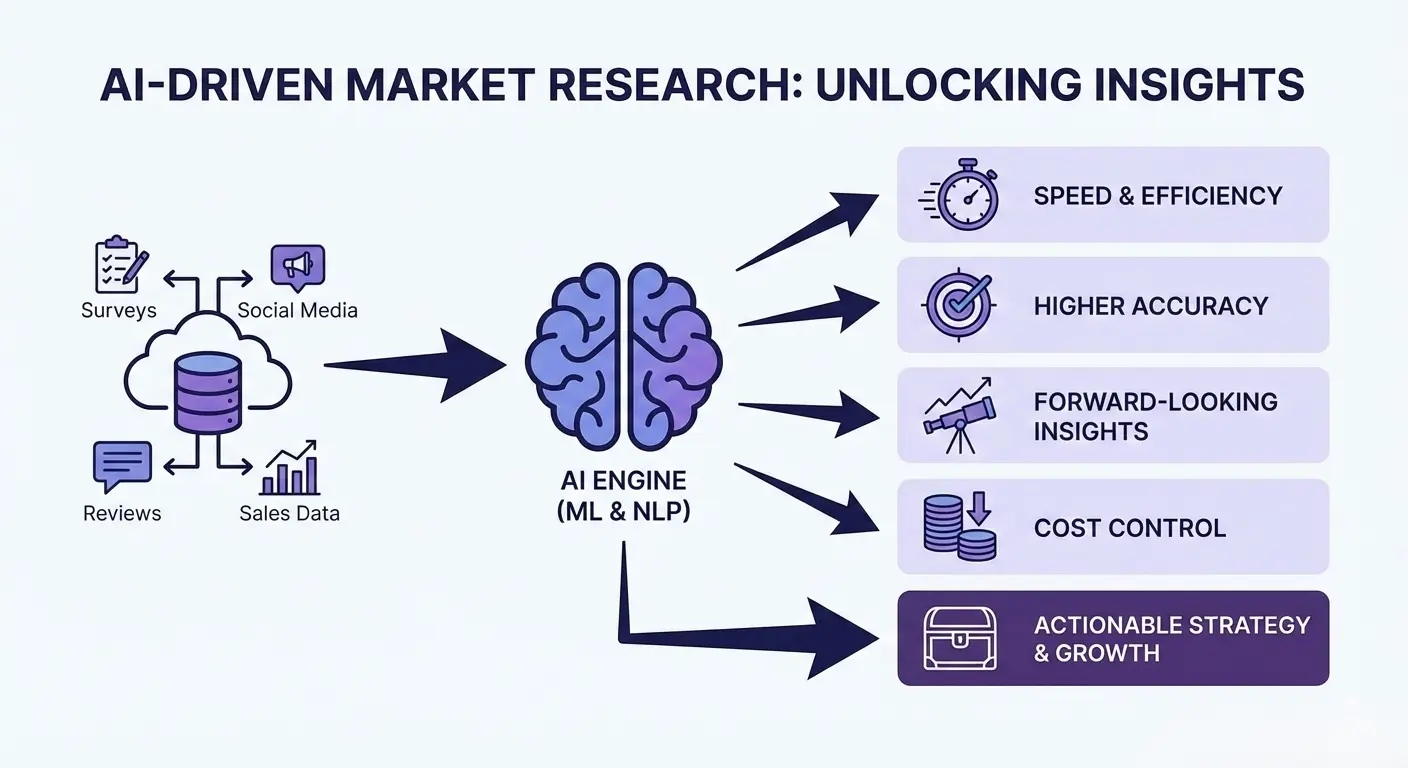
AI-driven market research uses technologies such as machine learning, natural language processing (NLP), and predictive analytics to analyse both structured and unstructured data. Unlike traditional research methods that depend heavily on human interpretation, AI systems can scan massive datasets in seconds, identifying relationships and signals that would otherwise go unnoticed.
"AI doesn’t replace human researchers. Instead, it amplifies their capabilities, allowing them to focus on strategy and interpretation rather than repetitive data processing."
Why AI Has Become Essential
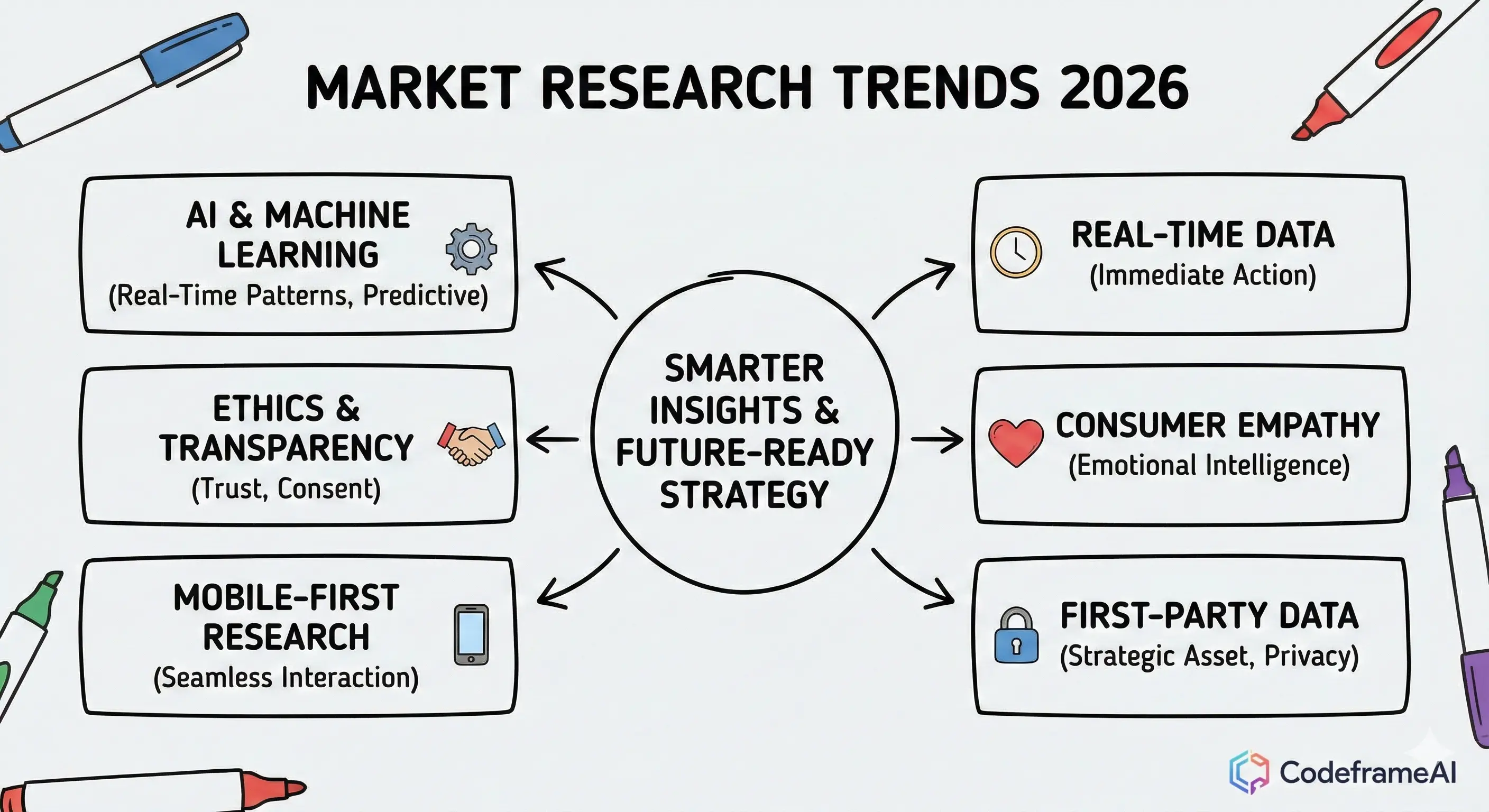
Markets move quickly. Consumer preferences shift, competitors adapt, and trends can rise and fall within weeks. AI helps businesses stay in step with this pace by delivering insights in near real time. Some of the biggest advantages include:
Speed and Efficiency
AI dramatically reduces the time required to analyse data. Tasks that once took weeks can now be completed in hours or even minutes.
Higher Accuracy
Machine learning models apply the same logic consistently, reducing errors caused by fatigue, bias, or subjective judgment.
Forward-Looking Insights
AI doesn’t just explain what happened — it helps predict what might happen next, enabling proactive decision-making.
Cost Control
By automating repetitive research tasks, businesses can reduce operational costs while improving output quality.
Solving Common Challenges with AI
Managing Large and Complex Data Sets
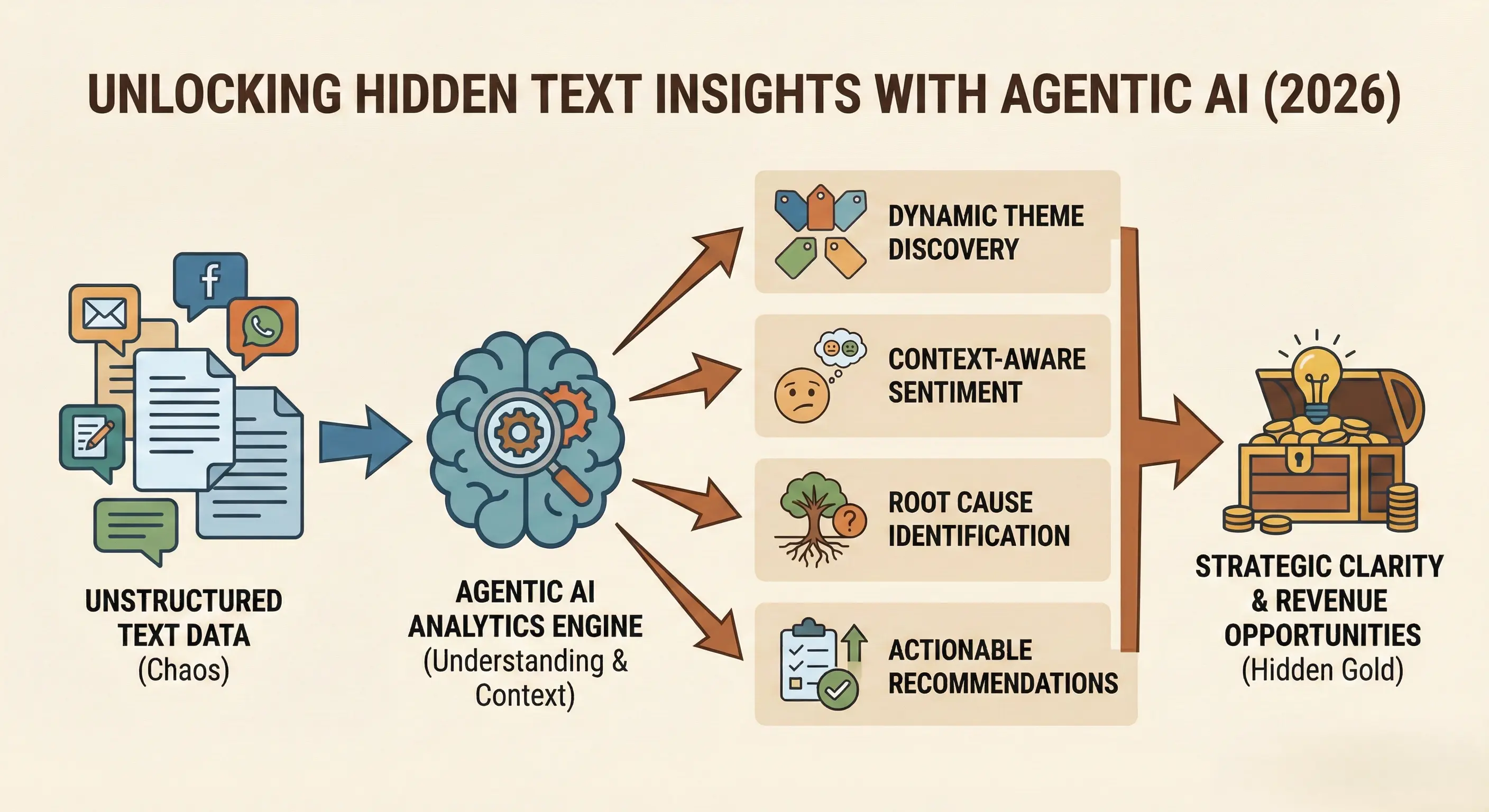
Every day, businesses generate enormous amounts of data. AI tools can seamlessly process structured data like sales figures alongside unstructured data such as customer comments, reviews, and social posts. This holistic view provides richer insights than siloed analysis.
Understanding Customer Preferences
Knowing what customers feel and why they feel that way is critical. AI uses sentiment analysis and behavioural modelling to detect emotions, expectations, and unmet needs — even when feedback is indirect or inconsistently phrased.
Predicting Market Trends
Predictive analytics allows businesses to spot emerging trends before they become mainstream. This is particularly valuable for product launches, pricing strategies, and market expansion planning.
Improving Survey Reliability
Surveys remain a cornerstone of market research, but they are prone to bias. AI can evaluate answers as they come in, flag anomalies, and highlight patterns that improve data reliability and interpretation.
Key Applications of AI in Market Research
- Sentiment Analysis: AI evaluates public opinion across reviews and social platforms to measure how people feel about brands.
- Competitive Intelligence: By analysing publicly available competitor data, AI uncovers insights into positioning and messaging.
- Customer Segmentation: AI segments audiences based on intent and behaviour for hyper-personalized marketing.
- Real-Time Insights: AI-powered dashboards provide live updates, allowing teams to react immediately to emerging risks.
How to Successfully Introduce AI
Implementing AI doesn't have to be overwhelming. Follow these steps:
- Step 1: Set Clear Goals. Identify what you want to achieve, whether it’s improving satisfaction or forecasting demand.
- Step 2: Select the Right Technology. Choose tools that align with your data types (text, visual, numerical).
- Step 3: Equip Your Team. Training ensures analysts can interpret outputs correctly and apply insights strategically.
- Step 4: Continuously Review. AI models improve over time with regular monitoring and feedback.
What the Future Holds
The role of AI in market research will continue to expand. Advances in voice analysis, conversational interfaces, and immersive data visualization are opening new possibilities. AI systems will increasingly move from analysis to recommendation, helping businesses decide not just what is happening, but what action to take next.
Frequently Asked Questions
What is the biggest benefit of AI in market research?
Its ability to process massive datasets quickly and accurately, delivering insights that would be impossible to uncover manually.
Is AI market research affordable for smaller businesses?
Yes. Many tools offer scalable pricing, and the efficiency gains often outweigh the initial investment.
How is data privacy handled?
Most reputable AI platforms comply with global data protection regulations (like GDPR) and use secure data-handling practices.
Does AI replace traditional market research?
No. AI enhances traditional methods by improving speed, accuracy, and depth of analysis.
Conclusion
AI is reshaping market research by turning data overload into meaningful insight. It empowers businesses to understand customers better, anticipate market changes, and make confident decisions backed by evidence. Whether you’re a startup or an established enterprise, embracing AI in market research is no longer optional — it’s a strategic advantage that drives smarter, faster, and more informed growth.