Leveraging AI for Smarter Market Research Strategies
The integration of artificial intelligence (AI) into market research is revolutionizing the way businesses analyze data and understand their markets. AI-driven tools are becoming indispensable for gathering consumer insights, optimizing strategies, and staying competitive in a rapidly evolving landscape. This article delves into how AI is reshaping market research, offering practical solutions to common challenges, and why businesses should embrace this technology.
What is AI-Driven Market Research?
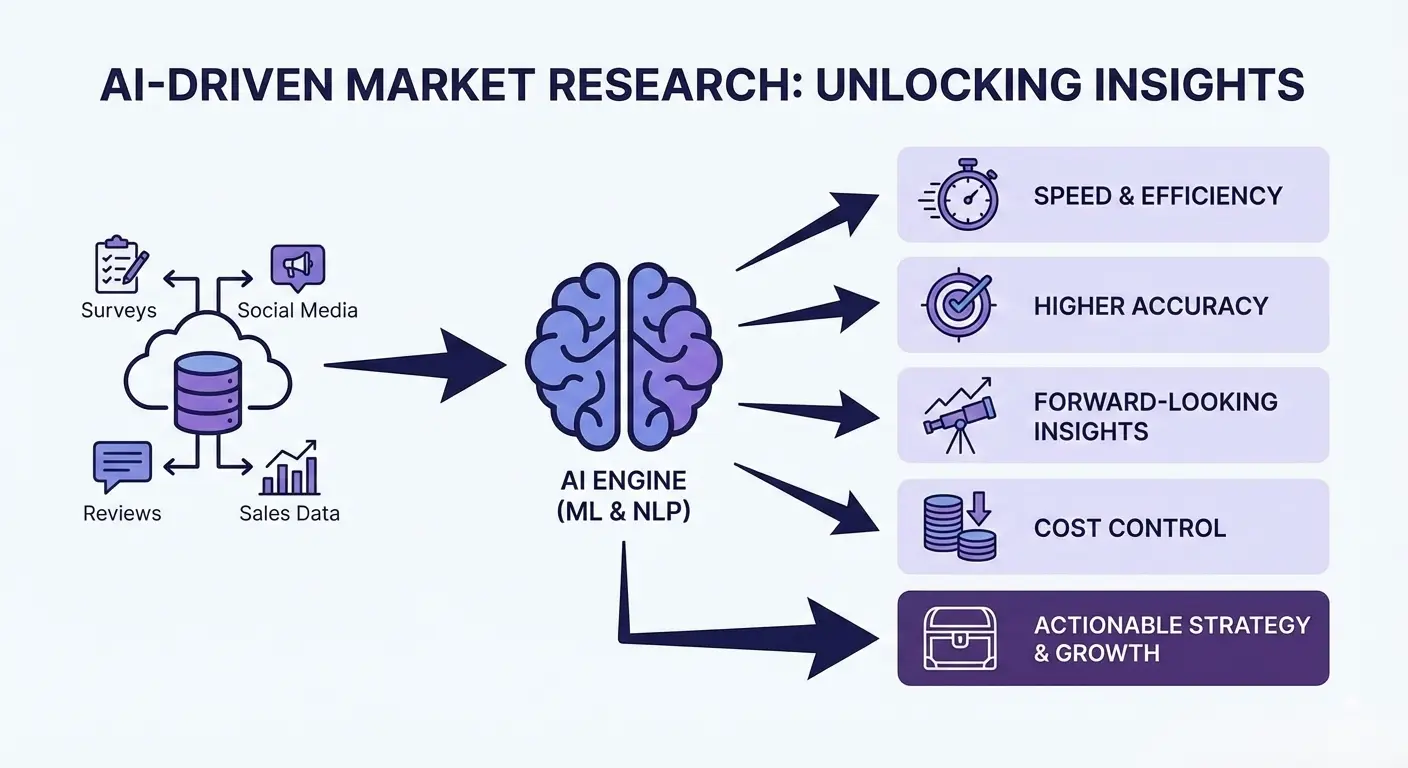
AI-driven market research involves the use of advanced technologies like machine learning, natural language processing (NLP), and predictive analytics to process and analyze massive datasets. Unlike traditional methods, AI tools can provide actionable insights in real-time, identifying patterns that might otherwise go unnoticed.
"AI-driven market research is not just a trend; it’s a necessity for businesses aiming to thrive in today’s data-driven world."
How AI Improves Market Research Efficiency
AI dramatically reduces the friction in traditional research methods through three key pillars:
1. Automated Data Collection
AI automates the collection of data from various sources, including social media, customer reviews, and online surveys. This reduces the time and effort required for manual data gathering, allowing teams to focus on strategy.
2. Real-Time Analysis
With AI, businesses can analyze data as it is generated, enabling them to make timely decisions that can significantly impact their market positioning.
3. Enhanced Accuracy
AI algorithms minimize human error, ensuring that insights derived from data are more reliable and actionable.
Solving Market Challenges with AI
Traditional market research often struggles with scale and speed. AI addresses these pain points effectively:
- Understanding Consumer Behavior: AI tools use sentiment analysis and behavioral data to understand consumer preferences and predict buying patterns.
- Handling Vast Data: The sheer volume of data generated daily can be overwhelming. AI-driven tools excel at processing large datasets without delays.
- Competitive Analysis: AI can analyze competitors' strategies, pricing, and customer feedback, providing a comprehensive view of the landscape.
- Predictive Analytics: AI's ability to forecast market trends and consumer demands empowers businesses to make proactive decisions.
Key Applications of AI in Market Analysis
Where is AI making the biggest impact today? Here are the primary use cases:
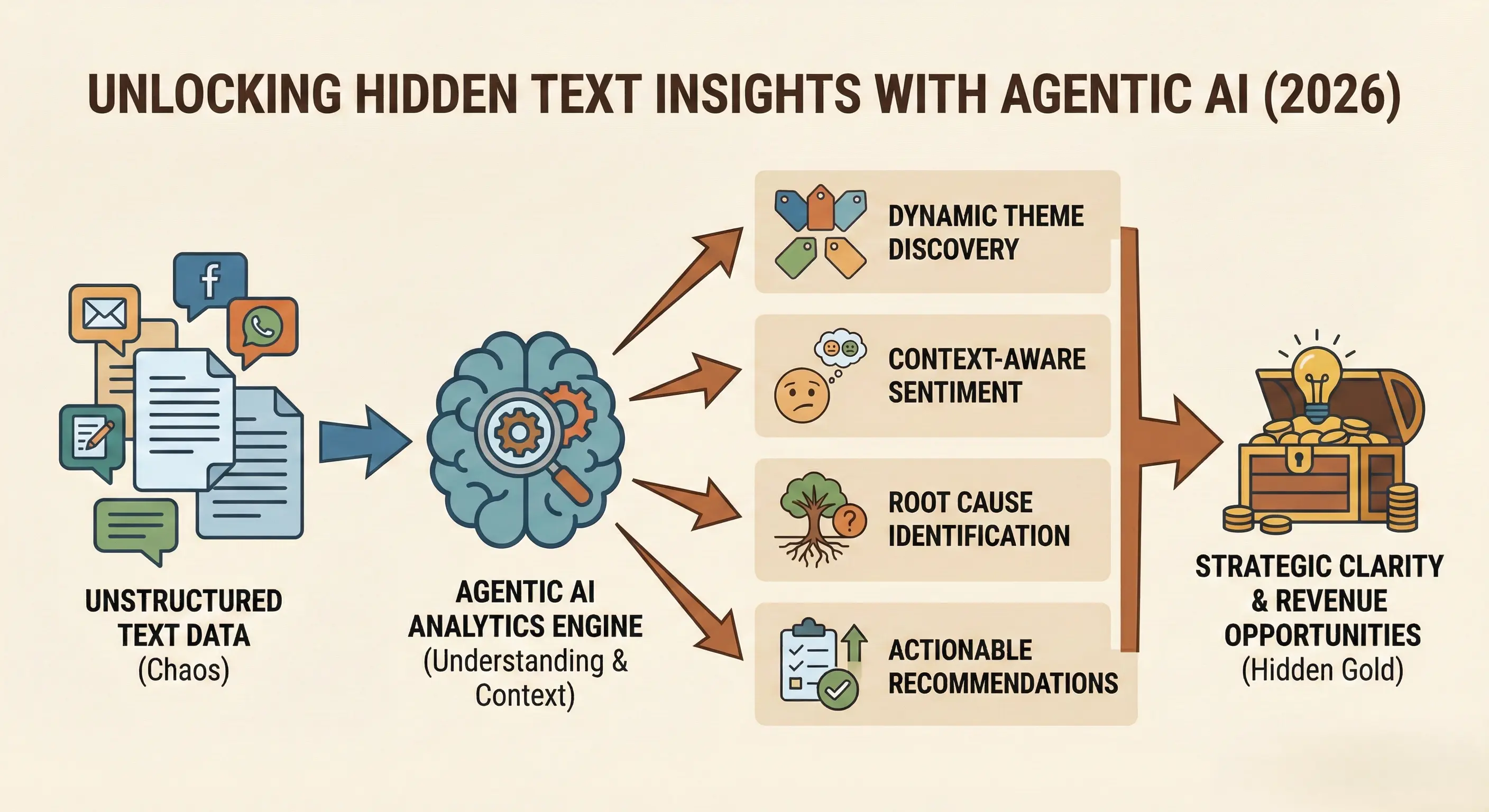
- Sentiment Analysis: AI tools analyze customer sentiment across multiple platforms, offering insights into public perception.
- Customer Segmentation: AI excels at segmenting customers based on demographics and behaviors for hyper-targeted marketing.
- Survey Optimization: AI enhances the accuracy and relevance of surveys by analyzing responses in real-time.
- Real-Time Reporting: AI-powered dashboards provide immediate updates on key metrics to capitalize on emerging opportunities.
Steps to Implement AI in Your Research Workflow
Ready to get started? Follow this roadmap to integrate AI into your research workflow:
Step 1: Define Your Objectives
Clearly outline what you aim to achieve—whether it’s understanding customer preferences, analyzing competitors, or predicting market trends.
Step 2: Choose the Right Tools
Invest in AI platforms that align with your business goals. Popular options include specialized machine learning platforms and predictive analytics tools.
Step 3: Train Your Team
Ensure your team is equipped to leverage AI tools effectively. Provide training sessions to familiarize them with the technology.
Step 4: Monitor and Optimize
Continuously monitor the performance of AI tools and make adjustments as needed to improve accuracy and efficiency.
The Future of AI in Market Research
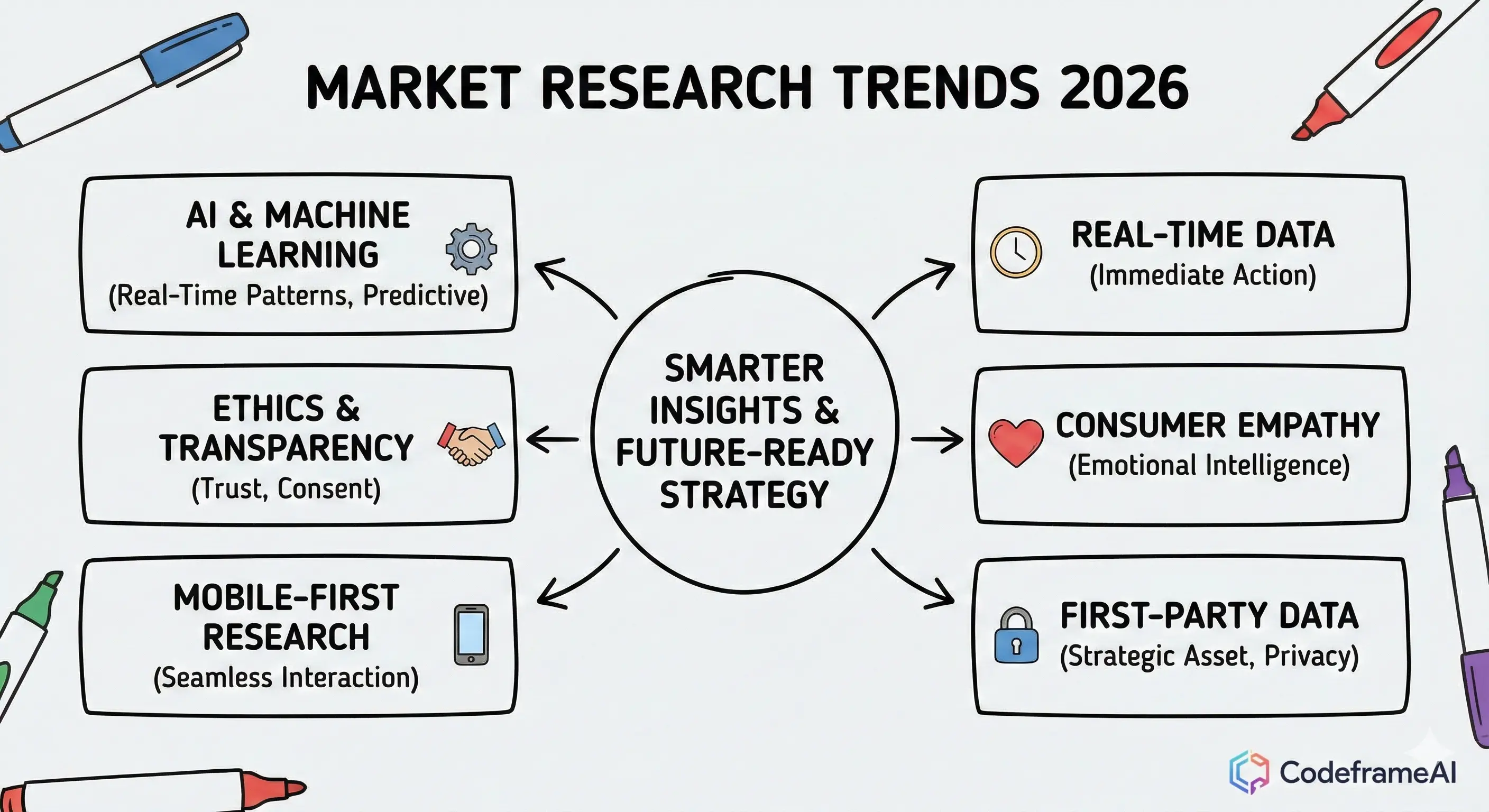
The role of AI in market research is set to expand with advancements in technology. Emerging trends like voice recognition, augmented reality, and blockchain promise to further enhance the capabilities of AI-driven tools. As these technologies evolve, businesses that adopt AI will be better positioned to navigate the complexities of modern markets.
Frequently Asked Questions
1. What are the primary benefits of using AI?
AI offers efficiency, accuracy, and predictive insights, enabling businesses to make data-driven decisions quickly and effectively.
2. Is AI accessible for small businesses?
Yes, many AI tools are scalable and offer affordable pricing plans suitable for small enterprises looking for automated insights.
3. How does AI ensure data privacy?
Reputable AI tools comply with data privacy regulations such as GDPR and CCPA, ensuring secure handling of sensitive information.
4. Can AI replace traditional methods?
AI complements traditional methods by enhancing their accuracy and efficiency rather than replacing them entirely.
5. Which industries benefit most from AI-driven market research?
Industries like retail, healthcare, finance, and technology benefit significantly due to their reliance on consumer data and market trends.
Conclusion
By leveraging AI technologies, companies can gain a deeper understanding of their markets, optimize their strategies, and drive growth. Whether you’re a small business or a large corporation, adopting AI for market research is a step toward a more informed and successful future.